PromptFlow / Development case study
Give prompt work
a release process.
A development workspace that connects prompt authoring, evaluations, skill packaging, and observability.
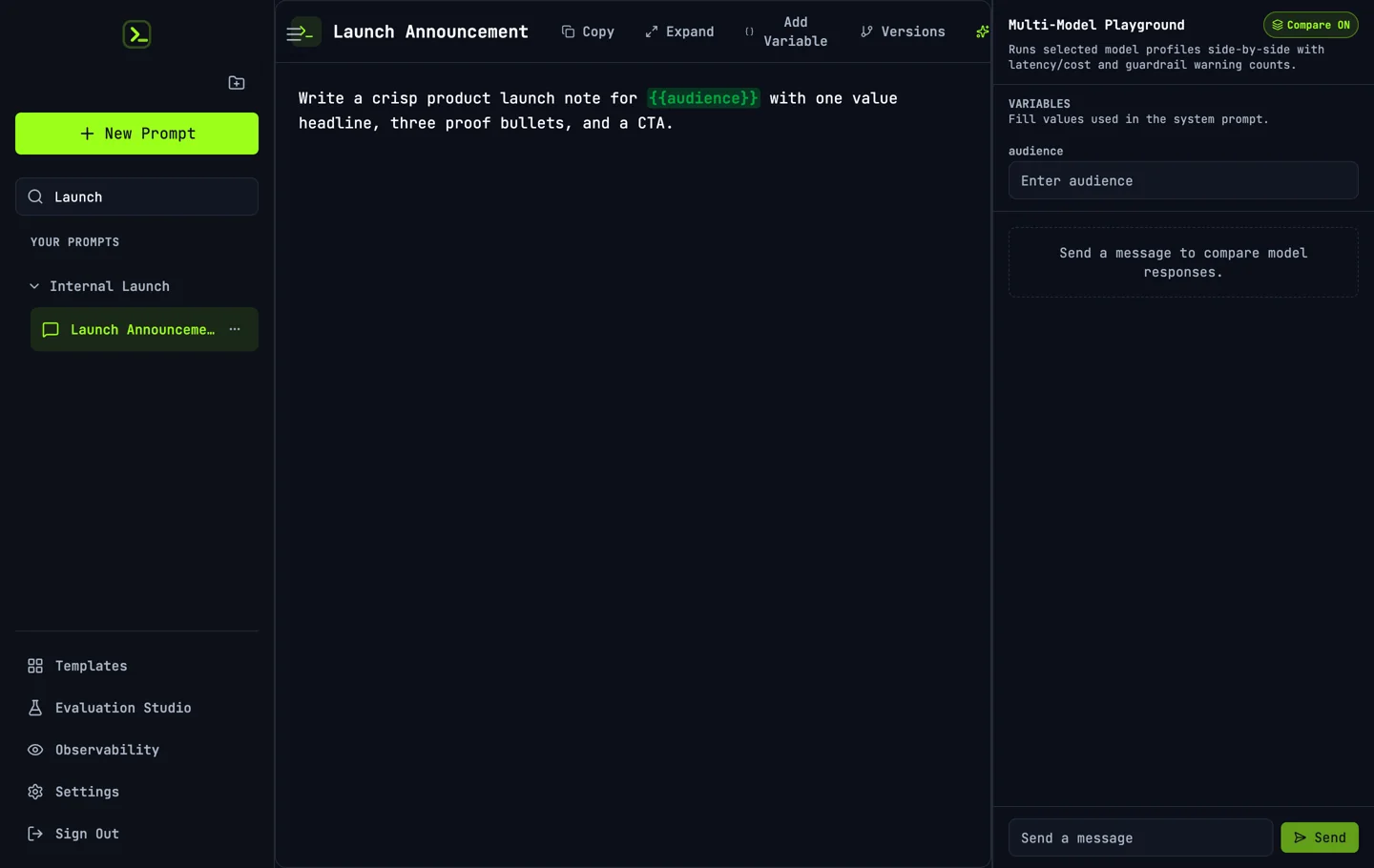
A workflow, not a collection of prompts.
PromptFlow is a workspace for people who need to maintain prompts and reusable AI skills over time. The interesting problem is what happens after a prompt first looks promising: changing variables, trying different models, checking regressions, and knowing which revision should be used.
I brought authoring, explicit versions, dataset-backed evaluations, and trace inspection into one product workflow. A prompt can be edited with its variables and tags, compared across configured model profiles, and evaluated against a dataset before a release pointer is changed. The intent is to give prompt changes the same deliberateness as other software changes.
Keep the client and the authority separate.
The web workspace uses React and Vite; the mobile companion uses Expo. Both consume a shared API boundary implemented in Hono and TypeScript, with persistence in Neon Postgres. Shared packages define session, query, AI, and seed contracts so each client does not invent its own interpretation of the same operation.
Authentication, scoped data access, and AI-provider credentials belong behind that boundary. The browser holds its active session in memory and uses an HttpOnly cookie for session bootstrap. The mobile client has its own secure-storage path. This is a product decision as much as an implementation detail: the workspace should make prompt work approachable without distributing server authority to the interface.
Make the consequences visible.
Evaluation Studio places datasets, prompt revisions, model profiles, and baselines in the same decision path. Observability brings trace history, latency, cost, and guardrail information back into the workspace. A result is more useful when someone can trace the conditions that produced it, rather than seeing an isolated response.
Reusable skill bundles extend that workflow beyond the editor. Curated exports include the selected skills and regenerated metadata, while import supports bringing bundles back into the workspace. Packaging and round trips matter because these artifacts are intended to be used elsewhere, not trapped in a single screen.
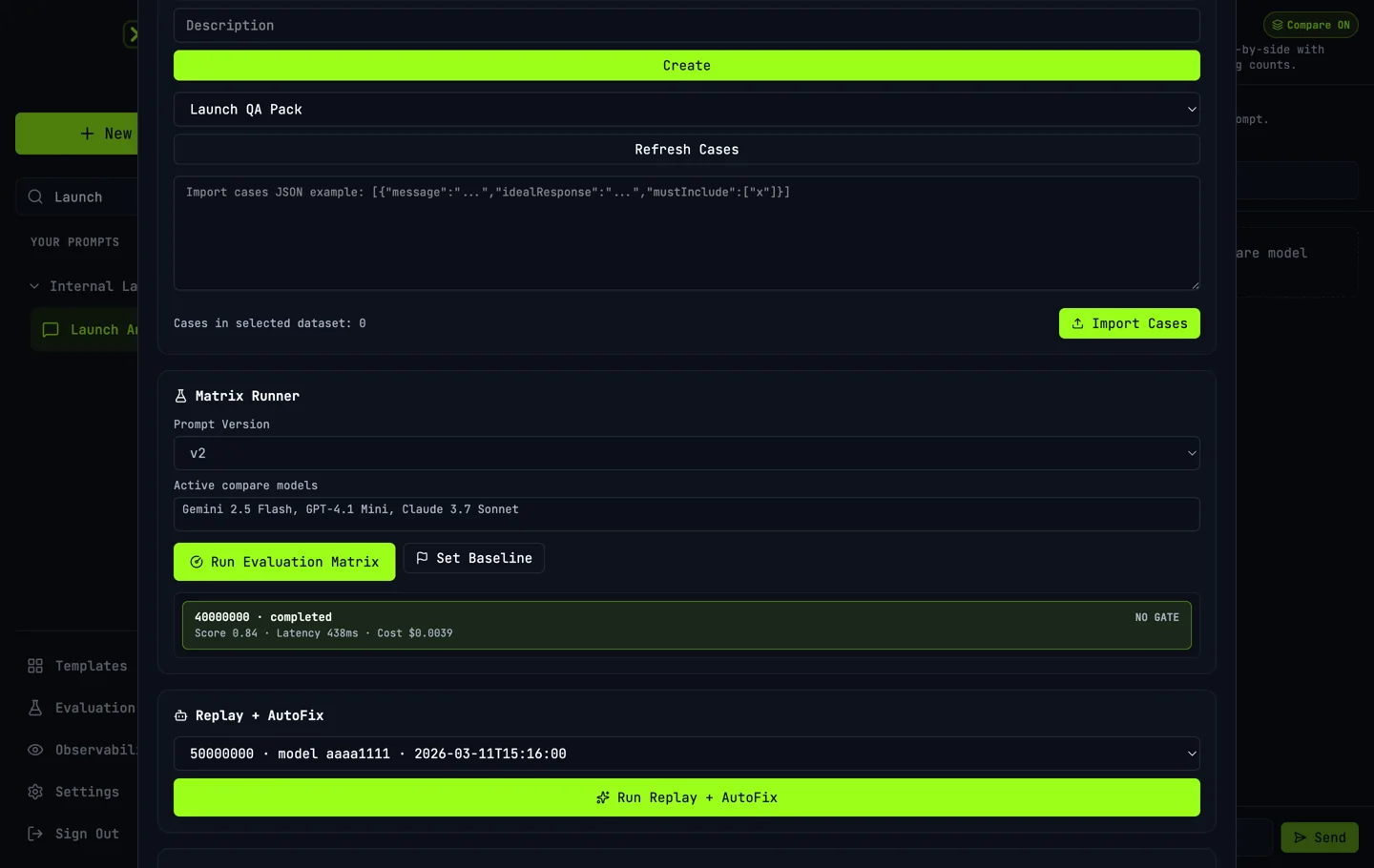
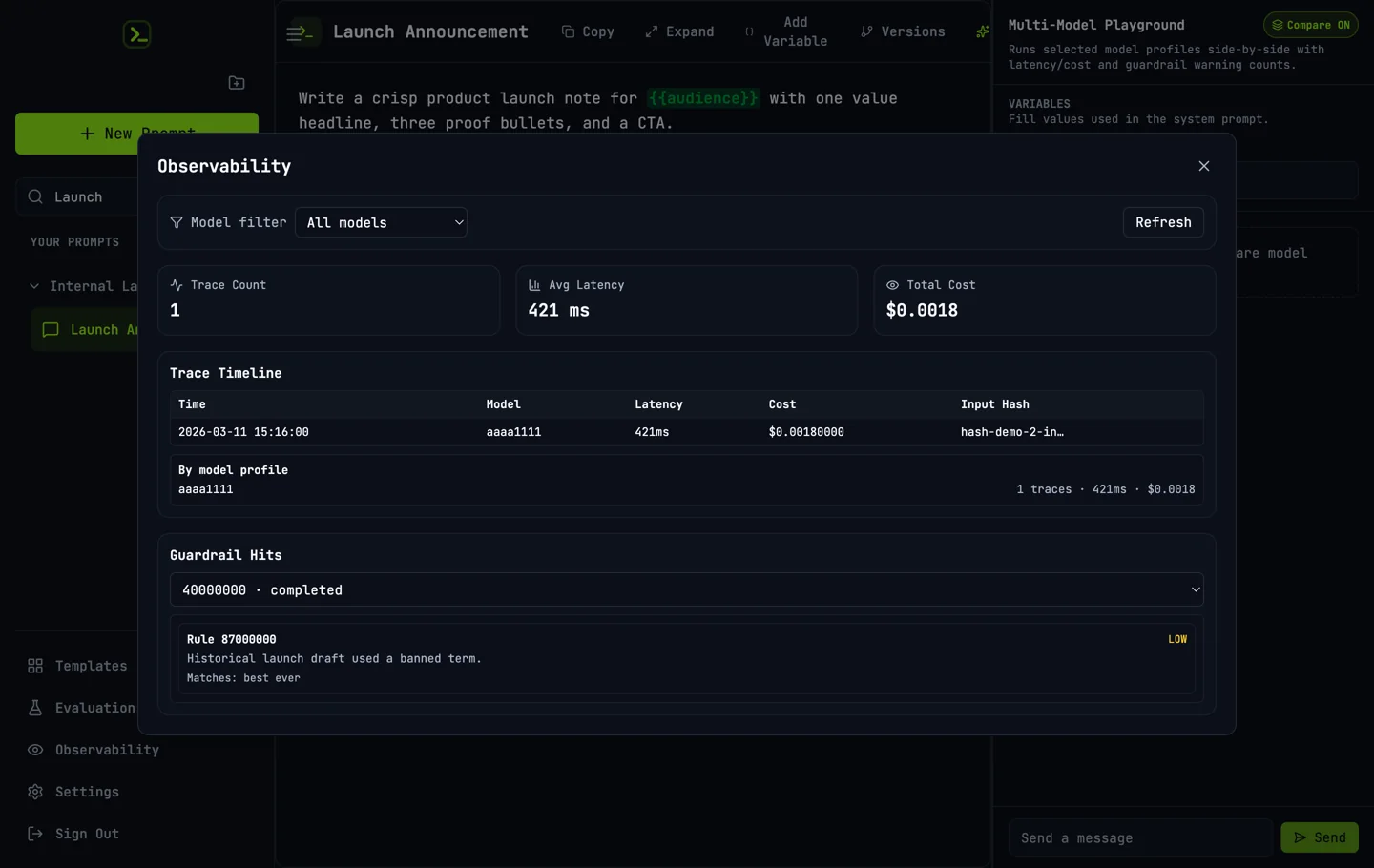
Verification and current boundaries.
The repository includes tests and documented validation around authentication, query contracts, account isolation, packaging, and development deployments. The case-study images come from checked-in representative screenshots. They show the workflow without exposing user prompts or private production data.
PromptFlow is development software. Staging and production remain parked in the repository contract; the reachable development sign-in page is not presented here as a public product demo. This page documents the implemented design and architecture, not a claim of general availability.
The useful lesson is that an AI tool needs more than a place to type. Versioning, evaluation, observability, and ownership of credentials are part of the product itself.